
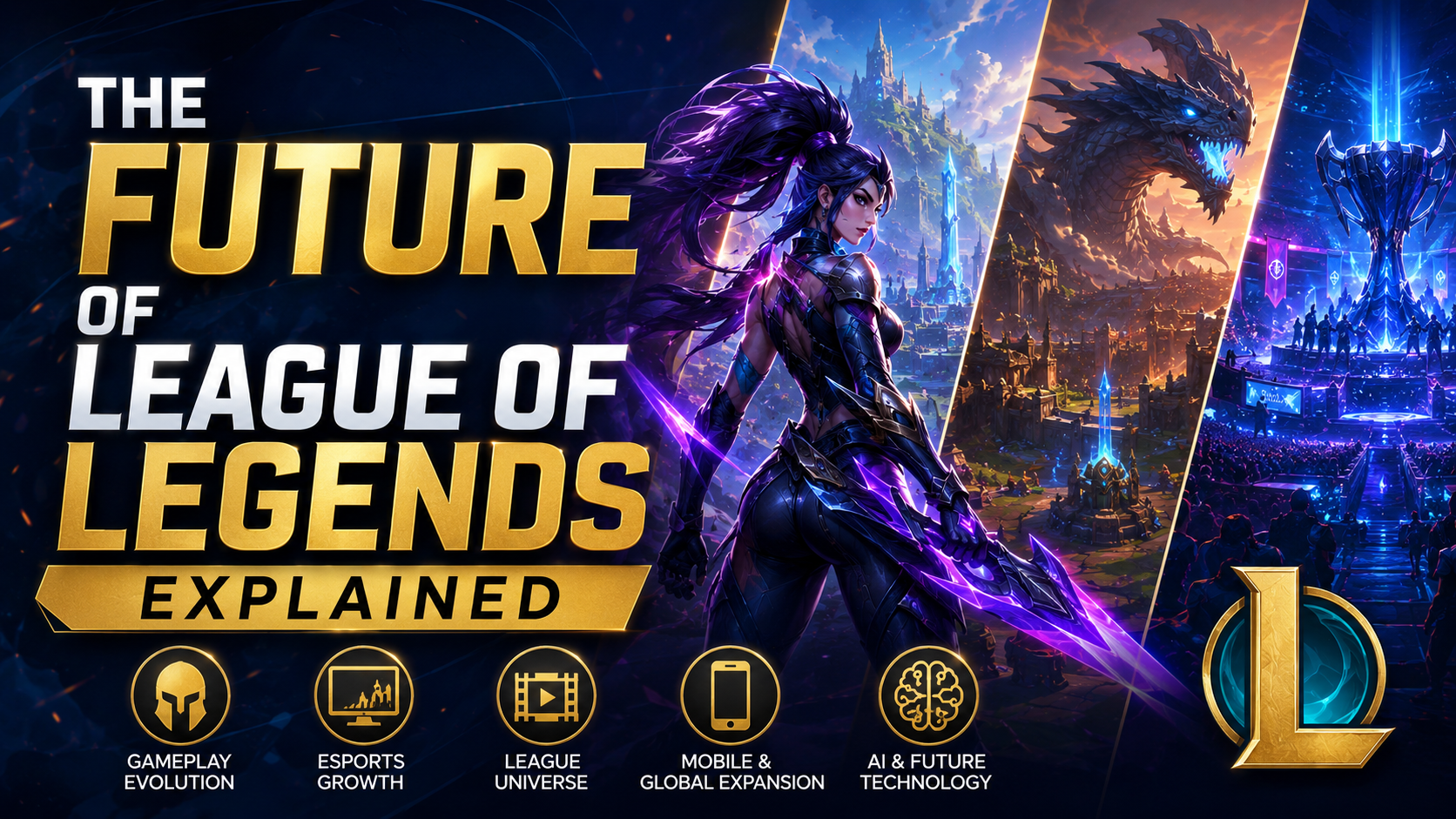
For more than a decade, League of Legends has remained one of the most influential competitive games in the world. From packed esports arenas to millions of active daily players, the game has evolved far beyond a simple multiplayer online battle arena (MOBA).
As someone who has played League of Legends for years, one thing has become obvious: Riot Games is no longer treating League as “just a game.” It has become a global entertainment ecosystem. Between major gameplay updates, expanding lore, new media projects, and evolving esports infrastructure, the future of League of Legends looks bigger than ever.
In this article, we’ll break down exactly where League of Legends is heading, what players can expect in the coming years, and why the game is still positioned to dominate the gaming industry.
The Evolution of League of Legends

When League of Legends launched in 2009, few people expected it to become one of the largest competitive games in history. Over time, Riot Games continuously reinvented the experience through:
- Major map updates
- Champion reworks
- New gameplay mechanics
- Seasonal ranked changes
- Massive esports investments
One personal experience that stands out for me was returning to the game after taking a break for almost two years. The difference was incredible. The pacing, objectives, visual updates, and champion balance felt almost like an entirely new game. That ability to evolve while keeping its core identity intact is one of Riot’s biggest strengths.
Unlike many multiplayer games that lose momentum over time, League keeps adapting to modern gaming trends.
Riot Games Is Expanding the League Universe
One of the clearest signs of League’s future is Riot’s expansion beyond the main game itself.
The success of Arcane proved that the League universe has massive storytelling potential. Even players who never touched the game became interested in its characters and lore.
Riot is now building an entire entertainment ecosystem around League of Legends through:
- Animated series
- Music collaborations
- Comics and lore expansions
- New Riot titles connected to Runeterra
- Cross-game character development
This strategy keeps the franchise relevant even for players who are not actively grinding ranked matches.
From a gaming industry perspective, Riot is following a model similar to what companies like Marvel and Blizzard attempted — but with stronger consistency and audience engagement.
The Future of Gameplay and Competitive Balance
Gameplay evolution will remain central to League’s future.
Riot has shown a clear commitment to keeping the game fresh through:
Frequent Champion Updates
Older champions continue receiving visual and gameplay reworks to stay modern and balanced.
Examples include:
- Updated ability kits
- Improved animations
- More skill expression
- Better counterplay mechanics
This helps prevent the game from feeling outdated despite its age.
Smarter Matchmaking and Anti-Toxicity Systems

One issue every long-term League player understands is toxicity.
Personally, I’ve had sessions where one negative teammate completely ruined the competitive experience. Riot appears increasingly focused on solving this problem through:
- Improved reporting systems
- AI-powered chat moderation
- Behavioral detection systems
- Ranked integrity updates
A healthier competitive environment is critical for League’s long-term survival.
Faster and More Dynamic Gameplay
Modern gamers prefer faster pacing and shorter downtime. Riot has already shifted League in this direction with:
- Quicker objective spawns
- More aggressive early-game rewards
- Increased mobility across champions
The future likely includes even more action-oriented gameplay to compete with modern multiplayer titles.
The Future of League of Legends Esports

League esports remains one of the largest competitive ecosystems globally.
Events like the League of Legends World Championship continue attracting millions of viewers every year.
However, Riot is also changing how esports operates behind the scenes.
Regional League Improvements
Expect stronger integration between:
- Regional leagues
- International events
- Content creators
- Community-driven broadcasts
Riot is focusing heavily on making esports more accessible to casual viewers.
Increased Creator Involvement
Streaming platforms and influencer culture now drive gaming engagement more than traditional advertising.
Many players, including myself, often return to League after watching professional streamers or esports tournaments. Riot understands this behavior and will likely continue investing in creator partnerships and co-streaming opportunities.
Mobile and Global Expansion
League of Legends: Wild Rift also plays a major role in the franchise’s future. Mobile gaming markets continue growing rapidly, especially in:
- Asia
- South America
- Southeast Asia
Wild Rift allows Riot to expand the League ecosystem to entirely new audiences.
Final Thought
The future of League of Legends looks incredibly strong.
Rather than relying solely on its legacy, Riot Games continues pushing the franchise forward through innovation, storytelling, esports, and technology.
As someone who has spent countless hours climbing ranked ladders, watching Worlds, and experiencing both the highs and frustrations of the game, I genuinely believe League still has many successful years ahead.
The biggest reason is simple: Riot understands that modern games must constantly evolve. And few developers evolve their games as aggressively as Riot Games.
Whether you’re a casual player, esports fan, or returning veteran, the next era of League of Legends will likely look very different — and far bigger — than what we know today.
Leave a Reply